At Jain’s Dental Villa, our main focus is to assist you in preserving a healthy and attractive smile. However, there are instances when a tooth extraction may be required to safeguard your general dental health. Our qualified team is ready to execute your tooth extraction with the greatest care whatever may be the reason (decay, crowding, damage or other issues). We ensure that the entire process is safe and comfortable. 

tooth extraction in ashok vihar

Reasons for a Tooth Extraction

1. Acute Decay or Damage: Extraction is the only option available if a tooth is significantly damaged by decay or trauma and it cannot be repaired by fillings, crowns or other restorative methods. Tooth extraction in Ashok Vihar is available at Jain’s Dental Villa.

2. Impacted Teeth: Extraction is required for teeth that are trapped below the gums. Teeth that are not fully erupted such as wisdom teeth can cause dental issues, pain, and infection. Extraction of teeth becomes necessary in such situations as well. Patients often ask about the wisdom tooth extraction cost, which depends on the complexity of the case.

3. In certain instances, teeth may require to be removed to manufacture space for orthodontic treatment, making sure that the alignment of your remaining teeth is proper. This prevents overcrowding of teeth allowing orthodontic treatments to be performed without hassle.

4. If a tooth is significantly infected, extraction represents a good option to prevent its further spread. Extraction is chosen especially in cases where the immune system is compromised.

Stages of Tooth Extraction

1. Prior to extraction, the patient will be subject to a comprehensive examination, including X-rays, to gauge the state of the tooth and neighbouring structures. We will go through the treatment methods along with the patient and make sure that extraction is the most viable solution for the condition.

2. An anesthesia will be administered so that the procedure is not painful. Sedation can also be used if the patient is anxious.

3. Our dentist will remove the tooth with utmost care and precision, taking care to mitigate any distress. Specialized tools are employed to loosen and remove a tooth in case of a simple extraction. In order to access impacted wisdom teeth, a small incision may be made in the gums. This allows the tooth to be extracted easily. During consultation, our team will also guide you about the wisdom tooth extraction cost depending on your specific condition.

4. After the procedure is completed, we will give you comprehensive after care instructions to ensure quick healing and avert complications. This will include advice on handling pain, swelling, and dietary restrictions in the period after the procedure. Look no further than Jain’s Dental Villa for tooth extraction in Ashok Vihar.

After a tooth extraction, it is common to experience mild bleeding, swelling and discomfort. These symptoms usually decrease within a few days. It is crucial to observe aftercare instructions given by our team to ensure correct recovery. It generally takes a week or two for the patient to recover completely. A dental implant, bridge, or denture can be used to replace the missing tooth if a wisdom tooth has been extracted. This will ensure that the function and appearance of your smile are restored. During your appointment we will go through the most suitable tooth replacement options for your requirements, as well as a transparent discussion of tooth extraction cost. If you are looking for tooth extraction in Ashok Vihar, Jain’s Dental Villa is the place to be.

Advantages of Tooth Extraction

Your dentist wants to assist you in keeping all of your natural teeth for the rest of your life. However, this may not be possible in all situations. In certain instances, it is required to get rid of one or more teeth. If a tooth extraction is ever suggested, you can be assured that the treatment will be advantageous. The following are some of the benefits of tooth extraction:

1. Pain Relief: In most cases, damaged and decayed teeth cause a lot of pain. This can come in the way of your regular routine, making it difficult for you to follow a balanced diet. Getting rid of such teeth can help alleviate pain. Pain relief is one of the biggest advantages of tooth extraction.

2. Reduced Threat of Long-Term Issues: In certain situations, tooth removal is suggested as a preventive tool to avoid long-term dental issues. This is usually associated with wisdom teeth. Most individuals don’t have sufficient space in their oral cavity to accommodate wisdom teeth. The alignment of other teeth is disturbed due to this. This also heightens the threat of cysts, TMJ disorder, decay and a variety of other issues. Patients often enquire about wisdom tooth extraction cost, which varies based on whether it’s a simple or surgical extraction.

3. Getting Rid of the Origin of an Infection: Root canal treatment is employed to get rid of the infected tissue when the pulp of a tooth is affected. In certain circumstances, the infection is so acute that root canal therapy is not suitable. This is when a tooth needs to be extracted completely so that the infection does not spread.

4. In some circumstances it may be required to extract a healthy tooth. Crowded teeth and extra teeth are removed to make space for orthodontic treatments. In order for braces to be placed, a tooth may need to be extracted so that the remaining teeth can be aligned properly.

Jain’s Dental Villa is the place to be for tooth extraction in Ashok Vihar.

Disadvantages of Tooth Extraction

1. Negative Impact on Surrounding Teeth: Tooth extraction, especially through surgical methods, has a threat of negatively impacting surrounding teeth. The tools utilized for tooth extraction can chip neighbouring teeth. The jawbone that supports the surrounding teeth can be affected too. This causes the underlying teeth to loosen over time. Our team of dentists will do their best to decrease the odds of complications, but the threat is still prevalent.

2. High Replacement Cost: Tooth replacements can be expensive based on the selection. Partial dentures, for instance, do not last for a lifetime and need to be replaced regularly. Dental implants tend to be more expensive than other choices. We ensure you understand all associated expenses, including tooth extraction cost, before the treatment begins.

Tooth extraction in Ashok Vihar is available at Jain’s Dental Villa. 

Post-Extraction Care and Recovery Tips

Recovering after a tooth extraction needs care and correct oral hygiene to make sure that the healing process is fast and devoid of complications. Here are some important tips to follow after the procedure:

1. Follow the Instructions of Your Dentist: Follow the instructions given by your dentist with regards to medicines, diet, and oral hygiene. This ensures correct healing and reduces discomfort.

2. Manage Bleeding: To stop bleeding after extraction, gently bite down on a gauze pad for 30-45 minutes. If bleeding persists, replace it with a gauze and keep light pressure.

3. Control Swelling: In order to reduce swelling, make use of an ice pack and apply it on the outside of your cheek for 10-15 minutes at a time for the first 24 hours.

4. Maintain Oral Hygiene: Do not brush directly over the extraction site for the first day. After 24 hours, infection can be prevented by rinsing gently with warm salt water twice a day.

5. Consume Soft Foods: Eat foods that are soft and easy to digest. Once the operated area heals, you can slowly return to your normal diet.

6. Avoid Alcohol and Tobacco: Both can increase the risk of infection.  

Why Choose Jain’s Dental Villa for Tooth Extraction in Ashok Vihar?

Our team has phenomenal experience and expertise in executing tooth extractions, making sure that the treatment is performed methodically and with little distress. We appreciate that the prospect of a tooth extraction procedure can be intimidating. We provide care, comfort, and support you require during the course of the procedure. From the first appointment to post-extraction care and tooth replacement, we provide a holistic set of services to meet your dental requirements. Jain’s Dental Villa is the place to be for tooth extraction in Ashok Vihar. Patients are also briefed about the wisdom tooth extraction cost beforehand so that they can make an informed decision.
Frequently Asked Questions

No. Your dentist will make use of an anesthetic prior to the treatment so that you don’t feel any pain. In majority of the cases, the dentist will employ a local anesthetic to numb the region of extraction.

Drinking through a straw and vigorously spitting are examples of suction activities that should be avoided after tooth extraction because they can dislodge blood clots and cause dry socket. For at least a few days, stay away from alcoholic and extremely hot beverages, as well as meals that are hard, crunchy, sticky, and spicy, to avoid bleeding, pain, and delayed healing. For the first 2-3 days, you should also refrain from using tobacco products and engaging in vigorous physical activity.

Dental crowns and bridges are important components of restorative dentistry. Bridges are prosthetic devices used to repair the spaces created by one or more missing teeth, whereas crowns are tooth-shaped coverings intended to strengthen damaged teeth. If you are looking for dental crowns and bridges in Paschim Vihar, Jain’s Dental Villa is the place to be.

dental crowns and bridges in paschim vihar

What Are Dental Crowns?

Dental crowns are customized, tooth-shaped caps that cover and offer protection to a tooth that has been damaged. It helps in the restoration of the shape, size and strength of the tooth. Whether you need support for a tooth with a large filling, restore a broken tooth or protect a tooth that is weak, dental crowns are the solution. The function and appearance of your tooth can be restored by a cap that is fitted over it. This cap is called a dental crown. Crowns are commonly used after root canal treatment or if a tooth is broken or weakened.

Reasons For Dental Crowns

If teeth are chipped or worn down by heavy fillings, crowns are a great option to improve the appearance of your smile. Crowns represent excellent cosmetic value. They are an important part of restorative dentistry and have been around for a long time now. Porcelain crowns blend seamlessly with your teeth and hence produce excellent cosmetic results. In order to make a crown, an impression of your tooth is taken and sent to the dental technician. You will be fitted with a temporary crown, while the permanent one is being designed. Extremely discoloured teeth or teeth that are out of shape can also be fitted with crowns. If you are looking for dental crowns and bridges in Paschim Vihar, come down to Jain’s Dental Villa.

Treatment Method Of Dental Crowns In Paschim Vihar

The colour of the crown will be made in such a way that it blends easily with your natural teeth. An adhesive is used to attach the crown to the tooth. Crowns can last up to 20 years with proper care. A tooth with a large filling can do with a crown. There is not enough natural tooth left and this is where a crown can provide strength to the tooth. A crown can also be used to safeguard a weak tooth from damage. Discoloured and badly shaped teeth are also suitable for crowns.

After root canal treatment, the tooth loses nerves and blood supply. A crown placed on top of the tooth will lend greater strength and keep the tooth steady. At Jain’s Dental Villa, we take into account the individual needs of each of our patients before deciding whether crowns are essential. Dental crown treatment is a smooth and painless process.

Types Of Dental Crowns In Paschim Vihar

As far as crowns are concerned, we offer a variety of options to cater to the needs of different patients. We create durable and natural looking restorations with the help of materials like porcelain, zirconia and ceramic. Close colour-matching and reliable protection are provided by crowns for weakened teeth. Crowns help produce a natural looking smile. Jain’s Dental Villa is your go to place for dental crowns and bridges in Paschim Vihar.

1. Porcelain-Fused-to-Metal Crowns: A layer of porcelain covers the metal base of these crowns. Their strength and beauty are well-balanced. While the porcelain mimics the color of your actual teeth, the metal offers durability. However, as gums recede over time, the metal underlayer may occasionally show up as a dark mark close to the gum line.

2. All-Porcelain or All-Ceramic Crowns: All of the materials used to make these crowns are porcelain or ceramic. Due to their ability to precisely resemble the color and translucency of genuine teeth, they provide the most lifelike results. For front teeth, where appearance is crucial, they are an excellent option. Popular all-ceramic crown materials that are renowned for their strength and longevity include zirconia and E-max.

3. Gold Crowns: Gold and other metals are combined to create gold crowns. They are strong, long-lasting, and gentle to neighboring teeth. They are frequently used for rear molars, but their metallic colour makes them less popular for teeth that are visible.

4. Base Metal Alloys: Non-noble metals like cobalt-chromium or nickel-chromium are used to make these crowns. They are not as aesthetically beautiful as porcelain or ceramic alternatives, but they are incredibly durable and reasonably priced. For certain people, they may be less biocompatible.

Advantages Of Dental Crowns

1. Pain-Free Choice: It might be very difficult to eat, drink, or even talk normally if you have a damaged tooth. In order to address the underlying issue, dental crowns are usually inserted following the completion of previous surgeries. In addition to making you feel more at ease, the crown will shield your teeth from further harm. It closes up the pulp from the outside and keeps dangerous bacteria out of the tooth.

2. Simple Procedure: People frequently fear getting dental crowns because they think the procedure will be challenging and uncomfortable. Fortunately, the procedure is simple. First, your tooth’s enamel will be cleaned and prepared. The tooth’s fractured or decaying portions are then removed. To make the tooth fit the cap tightly, it will be altered. An impression of your mouth will be used to cast your dental crown. In about two weeks, the crown will be completed. In the meantime, you will be wearing a temporary crown. When it’s finished, your dentist will fit you a crown.

3. Customizable: Each patient receives a custom-made dental crown that matches the colour of their natural teeth. There isn’t a single, all-encompassing solution. This guarantees that the new tooth or teeth will fulfill the same function as the ones that were lost. Even you won’t be able to tell that you have a dental crown on! It is natural in both texture and appearance.

4. Restoring Smile: In addition to protecting and strengthening broken teeth, crowns can make teeth seem better. Damaged or discolored teeth can lead to a loss of self-esteem and the need to hide smiles. On the other hand, dental crowns restore broken teeth and give a person’s smile a lovely, natural appearance. The fact that this dental work can help you feel more confident about your smile and your social skills is one of its best features.

5. Long Lifespan: Tooth crowns are made to last a lifetime. Depending on the patient’s oral hygiene practices, dental crowns can last anywhere from 15 to 30 years. It is equally important to choose a qualified dentist to perform it. Your dental crown should survive for many years if your dentist is skillful and employs high-quality bonding material.

Also read:- Dental Crowns And Bridges In Ashok Vihar

What Are Dental Bridges?

Dental bridges are used to replace lost teeth. They can specifically replace a single tooth or a row of lost teeth. This device actually “bridges the gap” in your smile, as the name suggests. Custom bridges can be made to match the color of your natural teeth. Dental bridges are suitable for patients who don’t like wearing dentures. Dentures need to be removed at night while bridges need not. Bridges are similar to natural teeth and hence there are no dietary restrictions for them. Gum irritation due to soreness will not be a problem if bridges are used.

A gap between teeth can be uncomfortable and has an effect on a number of functions. Whether the gap is at the front or the back of your mouth, it can affect talking, chewing and biting. A lasting and comfortable solution is provided as the bridge fills the gap between your teeth. Bridges are stain-resistant and strong. They improve functions such as biting, chewing and lend a natural look. Visit Jain’s Dental Villa for dental crowns and bridges in Paschim Vihar.

Treatment Method Of Dental Bridges In Paschim Vihar

In the early days of dental crowns and bridges treatment, the supporting teeth would suffer damage. This is because the supporting teeth have to be filed. Thanks to advancements in modern dentistry, the removal of healthy tooth structure is drastically reduced. In order for a crown to be placed over adjacent teeth, a tiny portion of enamel will have to be removed.

Teeth impressions are then taken which will provide a model for the bridge. Crowns and false teeth are made in a dental lab. While the bridge is being prepared, the exposed teeth and gums will be protected by a temporary bridge. The permanent bridge will be installed on your second visit to the dentist. Bridges can be completely made of porcelain or porcelain bonded to metal. Bridges can also be fitted to dental implants. Look no further than Jain’s Dental Villa for dental crowns and bridges treatment in Paschim Vihar.

Types Of Dental Bridges In Paschim Vihar

Dental crowns and bridges treatment is not a painless process. Here are the types of dental bridges:

1. Traditional Dental Bridge: This is the most frequently used bridge. The two ends of the bridge have dental crowns. Crowns are bonded to the natural teeth at either end of the gap and the area between the teeth is occupied by the bridge. A bridge is usually used if the teeth at either end are healthy.

2. Cantilever Dental Bridge: The fundamental difference between a cantilever dental bridge and the traditional dental bridge is that the former has a dental crown at only one end. When the bridge is attached to the abutment tooth, the artificial tooth is suspended over the gap. Cantilever bridges are used in cases when natural teeth are located at only one end of the gap.

3. Maryland Dental Bridge: A bridge is generally secured between two dental crowns. But here the bridge is present between metal wings instead of crowns. The bridge is held in place by the wings that are bonded between neighbouring teeth. These bridges are used to replace front teeth because they are not strong enough to replace rear teeth. They get their name because they were popularized in the dental school of the University of Maryland.

4. Implant Supported Bridge: A traditional dental bridge rests between two natural teeth. But an implant supported bridge rests between two dental implants. Dental implants are used when natural teeth are not strong enough to support the bridge. Before the bridge is fixed between the two implants, it is extremely important for the implants to fuse with the jaw bone. The entire process of setting an implant bridge may take from a minimum of three months to a maximum of six months.

Come down to Jain’s Dental Villa for the best dental crowns and bridges in Paschim Vihar.

Advantages of Dental Bridges

1. Surgery Not Required: Surgery won’t be necessary to restore your smile unless you have an implant-supported bridge installed. Maryland, cantilever, and traditional bridges are quick, easy outpatient treatments that don’t require a lengthy recovery period and can be finished in a single visit.

2. Affordable: When it comes to dental restorations, most people think about their budget. Because dental bridges don’t need as much accuracy or surgery as dental implants, they are substantially less expensive.

3. Secure: When eating or conversing, patients with dentures frequently lament that their denture is shifting or falling out. Dental bridges are not anchored to the gums, but rather to other teeth or implants, thus making them more secure.

4. Realistic: Dentures frequently move around in the mouth, which is both uncomfortable for the patient and obvious to others. Few people will be able to tell, that dental bridges are artificial because they feel and look more like actual teeth!

Why Choose Jain’s Dental Villa for Dental Crowns and Bridges in Paschim Vihar?

Have you been having trouble with a tooth? Is it heavily filled, cracked, fractured, or simply not at its best? Don’t wait for the issue to worsen! To find out if a dental crown or bridge is the best option for you, make an appointment with Jain’s Dental Villa right now. Start down the path to a more confident, healthy, and powerful smile. Your tooth will thank you for it!

Jain’s Dental Villa is the place to be for dental crowns and bridges treatment in Paschim Vihar.

Frequently Asked Questions

No. Crowns and bridges have different uses. The cap that is placed over a damaged or decayed tooth is called a crown whereas a bridge is used to fill the gap caused by a set of missing teeth.

For teeth that have had a big filling or root canal and are significantly decaying, cracked, broken, excessively worn down, or weakened, crowns are advised. When a patient wants to restore chewing function and stop neighboring teeth from slipping and has one or more missing teeth, bridges are advised.

Dental implants are made to give a base for false teeth that appear, feel and work like natural teeth. Smiling with confidence and the ability to eat almost anything are two of the greatest results of dental implant surgery. Preservation of facial structure and natural appearance of teeth are ensured when dental implants are placed. Missing teeth in the jawbone are replaced with implants which are little titanium posts. A strong foundation for the artificial teeth is provided by the titanium that bonds with the bone. Bone deterioration which is accelerated due to missing teeth is prevented by the installation of dentals implants that help preserve facial structure. Dental implants improve the quality of life of the patient. The comfort and confidence to eat, speak, laugh, and enjoy life are rediscovered thanks to the installation of dental implants. Jain’s Dental Villa is the perfect destination for dental implants in Paschim Vihar. Get in touch with us to know full mouth dental implants cost.

Initial checkup for dental implants

Before going ahead with a dental implant procedure, one must go through a dental/radiographic examination. The health history of the patient is carefully analyzed. Our dentists will listen to the needs and considerations of the patient during the initial visit. In order to make the procedure successful, your queries and concerns will be taken into account and we will work closely with you.

Understanding dental implants

Dental implants are tooth root substitutes and function as metal anchors. They are surgically installed in the jaw bone. Tiny posts are fixed to the implant, which extend through the gums. The artificial replacement teeth are anchored by these posts.

Installation procedure of dental implants in paschim vihar

Two surgical procedures are involved in the installation of dental implants. The jawbone is the area in which the implants are placed. Complete bonding of implants with the jawbone is a gradual process that takes 3-6 months post-surgery. These implants are below the surface of the gums. It is important to eat a soft diet and wear temporary dentures (false teeth) during this period. The function and aesthetics will be enhanced once the restorative dentist designs the final bridgework or denture.

The second phase starts after the bonding of the implants with the jawbone is complete. A healing collar is attached after the surgeon uncovers the implants. An impression is taken in order to make your new teeth. The implants are connected to posts or attachments. Replacement teeth are placed over the posts or attachments. The complete procedure takes around 6-8 months. If you are looking for dental implants in Paschim Vihar, Jain’s Dental Villa is the place to be. Dental implant cost is affordable at Jain’s Dental Villa.

Also read:- Dental Implant Clinic In Ashok Vihar

Advantages of dental implants

    1. Say “cheese!” It should come as no surprise that restoring your smile is one of the main advantages of dental implants. Dental implants can easily restore or create an aesthetically pleasing smile because they are tailored to match the color, shape, and size of your natural teeth.

    2. Additionally, dental implants can help stop the loss of oral bone. Over time, the jawbone beneath a lost tooth begins to degenerate. By stimulating the jawbone, dental implants help preserve facial structure and stop bone loss.

    3. Dental implants behave like natural teeth and can help restore full chewing function, allowing you to eat a variety of foods without the discomfort or limitations that come with artificial teeth. This is in contrast to artificial teeth, which can slip or shift when you eat.

    4. Stability of neighbouring teeth is ensured by dental implants. Bite and aesthetic issues are caused when surrounding teeth gradually shift into the gap in a crooked manner. A dental implant prevents this from happening.

    5. Since implants are fixed permanently in the mouth, they don’t have to be removed unlike artificial teeth. There is no possibility of implants suddenly falling out of your mouth.

    6. Clarity of your speech can be affected by missing teeth or poorly fitting false teeth. Your quality of speech is dramatically improved thanks to implants since they function like natural teeth.

    7. Your bite is affected by missing teeth as the match between upper and lower teeth is reduced. Jaw pain and chewing issues are caused due to disruption of bite. Since dental implants are permanently secured and function like natural teeth, your bite force is restored.

    8. As compared to other dental alternatives, dental implants offer a more comfortable solution. Artificial teeth tend to move around in the mouth but implants are fixed permanently to the jaw and offer greater oral comfort.

    9. Dental implants can be customized to meet your specific needs. They can be made to blend seamlessly with your natural teeth. Dental implants can match the size, shape, and colour of your natural teeth.

    10. Since dental implants function just like your natural teeth, it is easy to care for them. Brushing and flossing regularly will help keep dental implants clean.

    11. Dentures and bridges may need to be replaced after a certain period of time. But dental implants, though expensive can last a lifetime with good oral hygiene.

    Disadvantages of dental implants

      1. Requirement of Surgery: The fact that dental implants must be installed surgically is a significant drawback. Surgery is always a health risk. The usual rate of complications is about 5–10%. Infection, harm to neighboring teeth, delayed bone healing, nerve damage, persistent bleeding, jaw fractures, and more are among the risks and consequences associated with dental implants. Dental implants may be the best option for you if you are prepared to accept these risks.

      2. Loss of Bone: This is one significant drawback that you may want to take into account before choosing dental implants. Even while dental implants can help you keep your jaw’s bone mass intact, bone loss around implants is still possible. This results from years of normal bone loss. Your dental implant may need to be replaced if you experience excessive bone loss. For this reason, it’s critical that a qualified dentist like ours at Jain’s Dental Villa install your dental implants. To guarantee that your implant is positioned as optimally as possible for long-term outcomes, we take our time when arranging your dental implant procedure.

      3. Long Healing Time: Dental implants won’t be your answer if you want immediate results for your missing teeth. The lengthy healing period of dental implants is one of their main drawbacks. In order to place the implants, our dentist must first make sure your jaw has enough bone mass. If not, we will have to perform a bone graft procedure on you. Your gums must heal from extractions and bone grafts before we install your dental implants. Dental implants will then be surgically inserted.

      4. Expensive: Cost is a significant drawback of dental implants. We won’t mislead you and claim that they are the most economical choice because they aren’t. Please make an appointment for a consultation with our Jain’s Dental Villa dentist to determine dental implant cost. You might be surprised to learn how much they cost.

      It is essential to mark that not everyone is the right candidate for dental implants. The patient’s general health, oral hygiene and the experience of the dentist are some of the factors affecting the success of the procedure. Our team at Jain’s Dental Villa will guide you on whether you need bridges, dentures or dental implants. Dental implants in Paschim Vihar are available in Jain’s Dental Villa. Full mouth dental implants cost is affordable in Jain’s Dental Villa.

      Frequently Asked Questions

      Most individuals between the ages 18 and 90 years are eligible for dental implants. A bone graft may be required if there is significant bone loss. Thus, a robust base is provided so that the implants can be placed securely.

      Dental implants are safe and they are used to replace lost teeth. Regular visits to the dentist and good oral hygiene are essential to maintain dental implants.

      What is gum disease?

      Infection of the pink tissue that surrounds the teeth is called gum disease or periodontal disease. The 2 main stages of gum disease are gingivitis and periodontitis. Gingivitis is the initial stage of gum disease. Permanent damage of oral tissues does not occur and it is fairly mild. When gingivitis is not treated for a long time, it can lead to periodontitis. Gums and underlying bone can be damaged permanently in this stage. Older individuals, people with poor oral hygiene habits, smokers, and pregnant women are more prone to gum disease. Advanced gum treatment in Paschim Vihar can be availed at Jain’s Dental Villa.

      advanced gum treatment in paschim vihar

      Symptoms of Gum Disease

      Symptoms of Gingivitis

      1. Continuous bad breath.

      2. Puffy gums that are red and swollen.

      3. Brushing and flossing leading to bleeding of gums.

      4. Teeth may appear longer than normal due to mild gum recession.

      Symptoms of Periodontitis

      1. Loss of teeth.

      2. Pain during chewing.

      3. Dentures and bridges not fitting correctly.

      4. Acute gum recession.

      Types of Advanced Gum Treatment in Paschim Vihar

      The extent of gum disease determines the type of treatment required for the same. Changes to your at-home oral hygiene routine is sufficient in mild cases. Extensive care is necessary in acute cases of periodontitis.

      Scaling and Root Planing: Scaling and root planing is also called deep cleaning. The process of removing plaque and tartar from teeth and gums is called scaling. The areas around and beneath the gumline are spots that cannot be reached through regular dental cleaning. Scaling is used to remove bacteria in these regions.

      Root planing is the process by which the roots of your teeth are smoothened. This enables gums to reattach themselves to teeth as they heal. This prevents the buildup of plaque. When we notice symptoms such as swelling, bleeding, and inflammation, we prevent it from progressing and causing permanent damage to your oral health. Bacteria that get accumulated around and beneath the gumline are removed with the help of scaling and root planing.

      Special dental instruments are used to scrape away plaque and tartar during scaling. The region under the gumline where bacteria deposits are formed will be specifically targeted. Root planing begins after scaling is complete. Parts of the teeth beneath the gumline are smoothened down so that gums attach to your teeth more easily. Future buildup of bacteria is prevented thereby enabling a quicker healing process. The risk of developing gum disease in the future is greatly reduced.

      Post care tips after scaling and root planing: It is important to brush your teeth twice a day using a soft-bristled toothbrush and a fluoridated toothpaste. Gentle circular motions must be employed. In order to prevent irritation and to wash away food particles, rinse your mouth with salt water after eating. It is important to floss every day. Spicy, acidic and hot foods must be avoided. A soft diet is recommended for 48 hours after the treatment. Finally, intense physical activity should be avoided after the procedure.

      Antibiotic Treatment: Scaling and root planing is often coupled with antibiotic therapy. Deep cleaning removes most of the bacteria but the residual bacteria can be removed with the help of antibiotics. The pockets between the teeth and gums are the region in which the antibiotic is placed. Pocket size is gradually reduced as the medication is released. This process takes a few weeks.

      Laser Periodontal Treatment: Diseased gum tissue is removed with the help of a laser. Proper healing is ensured by getting rid of the infected areas. As compared to treatment procedures performed with a scalpel, those performed with a laser are faster and more precise. Bacteria also get killed when exposed to the laser.

      Also read:- Advanced Gum Treatment in Ashok Vihar

      Advantages of Advanced Gum Treatment

      1. Better Oral Health: Treatment for periodontal disease focuses on eradicating germs and reducing inflammation to address the underlying cause of the problem. This results in healthier gums, which lowers the chance of tooth loss and stops the oral structures from further deteriorating.

      2. Improved General Health: Studies have connected gum disease to a number of systemic diseases, including diabetes, heart disease, and respiratory disorders. In addition to improving oral health, treating gum disease may lower the chance of acquiring some more serious health issues.

      3. Stopping Progression: The best way to stop gum disease from getting worse is to act quickly. By receiving treatment, the illness can be prevented from progressing to more advanced stages, where it will be more difficult to repair the damage.

      4. Preserving Teeth: Gum disease can weaken the teeth’s supporting framework. People can preserve their natural teeth and prevent the need for extractions or other invasive dental treatments by seeking treatment to safeguard these structures.

      5. Improved Comfort: The symptoms of gum disease like bleeding and sensitivity cause pain and discomfort. Treatment not only deals with the primary cause but also addresses these symptoms, improving general comfort.

      6. Increased Confidence: Gum disease’s visual effects can have an impact on a person’s sense of self-worth. In addition to restoring dental health, treatment improves appearance of your smile, which increases self-esteem and facilitates better social interactions.

      7. Long-Term Savings: Compared to treating severe stages, early gum disease treatment is typically less intrusive and more economical. People can avoid potential future dental problems and costs by investing in treatment early on.

      Disadvantages of Advanced Gum Treatment

      1. Exposure of tooth structure may result in change in shape of the gums. This can alter a person’s smile.

      2. Advanced gum treatment involves the removal of healthy gum tissue in order to remove the unhealthy tissue.

      3. The cost of treatment can be expensive in some cases.

      4. Painkillers may be required after advanced gum treatment.

      5. Advanced gum treatment is an invasive procedure and could involve significant bleeding.

      6. It could result in disruption of your schedule and time off work.

      7. Soft food diet is recommended for several weeks after treatment.

      Why Choose Jain’s Dental Villa for Advanced Gum Treatment in Paschim Vihar

      Zen Dental uses the newest technologies to improve patient comfort and procedure results. Our periodontal therapies emphasize preventive and long-term health rather than just treating current problems. Gum health is maintained in large part by routine examinations and informed advice.

      Among the top dental clinics in New Delhi, Jain’s Dental Villa stands out for its individualized treatment programs and dedication to gentle, efficient procedures. Every patient receives support and advice that are specific to their needs, guaranteeing the greatest outcomes.

      You are choosing a partner in your dental health journey when you choose Jain’s Dental Villa. Our website, jainsdentalvilla.com, makes it simple for anyone who wants to make an appointment or learn more about our periodontal treatments. Our committed staff is ready to help you attain a healthy smile.

      Frequently Asked Questions

      Brushing very forcefully with a hard-bristled tooth toothbrush can result in damage to the gum tissue. This makes the gums more prone to disease.

      There are no specific home remedies to cure gum disease. But it can be prevented from spreading by maintaining a good level of oral hygiene. You must brush twice a day using a fluoride toothpaste. Flossing must also be done every day and an antibacterial mouthwash should be used. The above methods will help prevent food particles from getting stuck between your teeth. It is also important to have a balanced diet. Food items containing high sugar must be avoided. Consumption of fruits and vegetables will help reduce the chance of plaque buildup. Smoking and chewing tobacco cause gum disease and should be avoided.

      You might grow up with gaps between your teeth as a child. While your baby teeth stay the same size, your jaw becomes larger. When your baby teeth start to fall out and larger permanent teeth erupt to cover the gaps, these gaps shift. Diastema are gaps in adult teeth. Gap in teeth can be addressed with the help of braces. Gap teeth can also be treated with the help of dental bonding, veneers, or crowns and bridges.

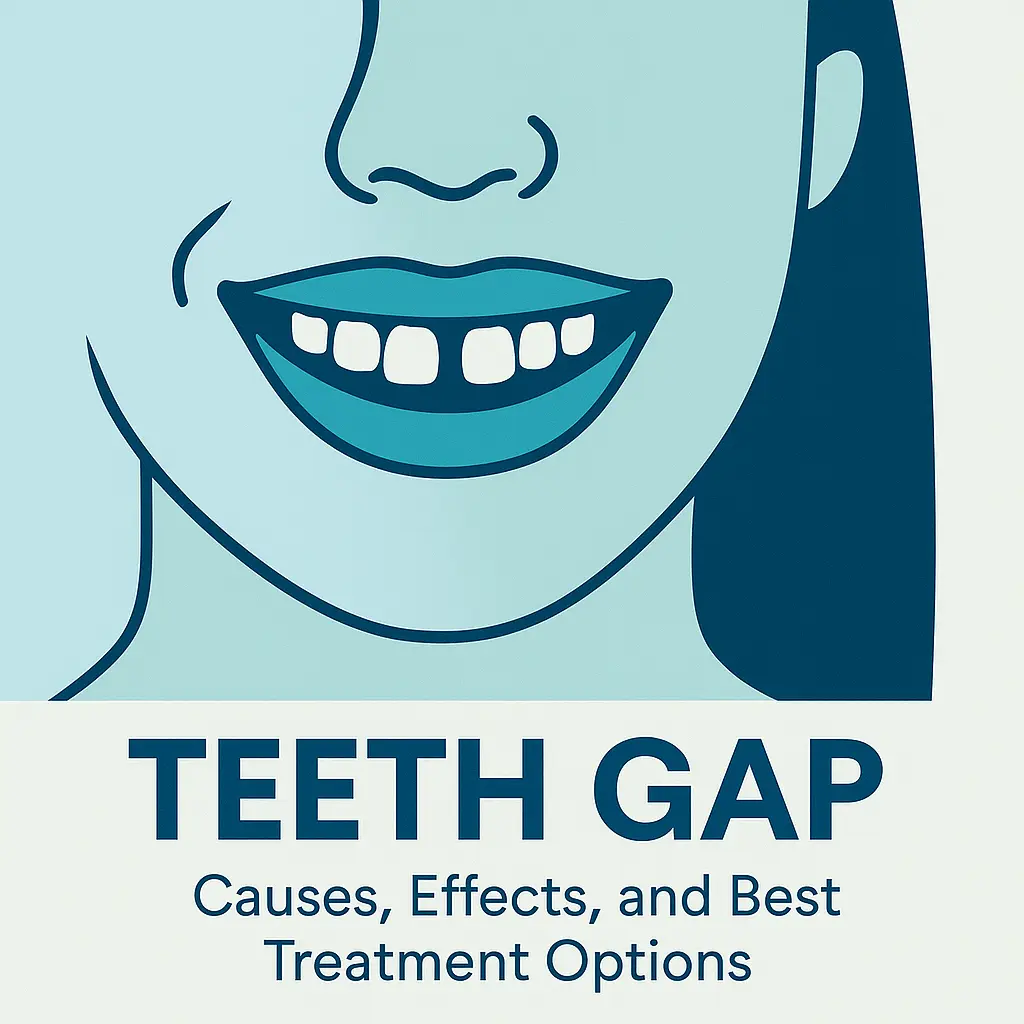
      Teeth Gap: Causes, Effects, and Best Treatment Options
      Teeth Gap: Causes, Effects, and Best Treatment Options

      What is a diastema?

      A diastema, commonly known as a gap tooth or tooth gap, is a space larger than 0.5 millimeters that separates two or more teeth. Although they can happen between any two teeth, diastemas most frequently occur between the two top front teeth. Gap teeth are common and can be caused by an imbalance between the size of the jaw bone and the teeth. Gap in teeth can also be brought on by genetics, tooth loss, and thumb-sucking behaviors.

      Some people decide to keep their big tooth gap because they think they look good. But they can also lead to problems with self-confidence, speech, and chewing. Veneers, orthodontic therapy, dental bonding, and in more extreme situations, dental implants or bridges, are available as treatments for gap in teeth. The patient’s preferences as well as the origin and severity of the gap teeth will determine the appropriate course of action. Teeth gap treatment is available at Jain’s Dental Villa.

      Causes of Teeth Gap

      What causes gaps in teeth? The following are some of the reasons:

      1. Size of teeth relative to jawbone: If the teeth are too small in comparison to the size of the jawbone, a gap in teeth may be formed. This can be genetic.

      2. Missing or Undersized Teeth: This is among the most frequent causes of gap teeth. Gaps or spaces between teeth are caused by undersized or missing teeth.  The upper lateral incisors, a pair of upper (maxillary) teeth, are primarily involved in this. The two front teeth become apart if the upper lateral incisors are tiny or absent.

      3. Gum Disease or Periodontitis: Gums retreat and the jaw bone loses density and support as gum disease worsens. The teeth can readily shift, leaving spaces between them, in the absence of this stable foundation and feeble roots.

      Periodontitis, an advanced stage of gum disease, causes inflammation that leads to the loss of the gum connection and bone support surrounding teeth. An irregular gap or space between the gums and the teeth may result from this.

      Simply tapping the back of your teeth with your tongue might cause gaps and push your teeth forward if you have gum disease because periodontitis weakens the tissues that support your teeth.         

      1. Poor Dental Habits: Teeth spacing can result from practices like thumb sucking, lip sucking, tongue pushing, and others. You may develop a gap between your front teeth if you have a habit of pressing your tongue on your teeth as you swallow! As their teeth erupt, babies who frequently chew on their thumb are also more likely to experience gaps. Sometimes a big tooth gap may also develop.

      2. Loss of Primary Teeth: Children are most likely to exhibit this. When their primary teeth fall out, they experience a brief period of gap teeth. The gaps are filled in when the permanent teeth erupt. These gaps usually close as their adult, or permanent, teeth erupt.

      3. Overhanging Dental Restorations: Gingival inflammation and gap teeth are frequently brought on by defective dental restorations. One of the biggest issues with dental health is overhanging dental restorations, or ODR. An ODR is a restorative material extension that extends beyond cavity preparation. They have been firmly linked to the development of periodontal disease, which ultimately results in tooth spacing issues and other dental health issues. ODR removal can improve efficacy, but you should speak with your dentist.

      If you are searching for teeth gap treatment, look no further than Jain’s Dental Villa.   

      Also read:- Dental Implants Clinic In paschim Vihar     

      How To Close Teeth Gap Without Braces?

      1. Dental Bonding: If you have gaps in your front teeth, you might be a good candidate for dental bonding. Your smile will look better after this minimally invasive surgery to close your tooth gap. You won’t detect the composite because it blends in with your natural teeth.

      When bonding teeth, dentists employ composite resin to fix anatomical defects such as spaces between teeth. The procedure just requires one dental appointment and takes thirty minutes to an hour to finish. Following the operation, patients are able to resume their regular dental activities.                  

      2. Veneers: One of the mainstays of modern cosmetic dentistry is veneers. In order to conceal a gap in teeth that becomes visible when a person smiles, these oral restorations are extremely thin shells that are glued onto the front surfaces of teeth. Since veneers can be applied in as little as two weeks, they are the quickest method of addressing gap teeth and improving a person’s appearance.

      3. Crowns and Bridges: Porcelain dental crowns can be sized to match the gap’s spacing when they are placed over the tooth or teeth on either side of the gap. As a result, there doesn’t seem to be any gapping between the teeth. This method is a quick and affordable option to close a tooth gap, restore a person’s smile, and enhance their general quality of life.

      Dental bridges fill up the spaces left by one or more missing teeth. Dental bridges can restore the appearance and function of missing teeth, including front teeth. A pontic, or artificial tooth, can be used to support dental bridges, which are composed of dental crowns positioned on each side of the missing tooth. The anchoring teeth, known as an abutment, are the teeth on either side of the dental gap. Gold, silver amalgam, or porcelain can be used to create the pontic, or fake teeth, as directed by the dentist. Dental bridges can also be supported by natural teeth or implants.

      Jain’s Dental Villa is the place to be for teeth gap treatment. Braces can be used to treat a big tooth gap. Side teeth gap treatment can be done with the help of the above methods.

      Closing Gaps in Teeth at Home

      1. Oil Pulling
      2. Tongue Exercises
      3. Flossing
      4. Use of Dental Bands or Floss Ties
      5. Use of Teeth Gap Bands
      6. Smile Exercises
      7. Diet and Nutrition

      Advantages of Teeth Gap Treatment

      1. For aesthetic reasons, people frequently decide to close the gap between their teeth. By doing this, you can improve your smile’s symmetry and uniformity, which will increase your self-esteem and confidence.

      2. Food particles can occasionally get trapped in dental gaps, raising the risk of plaque accumulation and dental problems like cavities and gum disease. Maintaining good dental hygiene can be made simpler and more efficient by closing the gap.

      3. A big tooth gap may occasionally be a factor in speech problems or trouble pronouncing words correctly. These problems might be lessened and voice clarity could be enhanced by closing the gap.

      4. Over time, dental gaps may cause nearby teeth to move out of alignment. Maintaining appropriate tooth alignment and preventing this undesired movement can be achieved by closing the gap between teeth.

      Jain’s Dental Villa has state-of-the-art facilities for teeth gap treatment.

      Disadvantages of Teeth Gap Treatment

      1. Braces, aligners, and dental bonding are examples of costly dental procedures used to narrow gaps. Your choice may be influenced by cost, particularly if your insurance does not cover the treatment. 

      2. When it comes to wearing braces or other orthodontic procedures, closing a dental gap usually takes time. You’ll need to think about if you’re prepared to put in the time required to get the outcomes you want. Teeth gap treatment can take time.

      Why Choose Jain’s Dental Villa for Teeth Gap Treatment?

      At Jain’s Dental Villa, our team of dentists is committed to offering holistic and customized care. We know that every patient is unique, and we customize our treatments to satisfy your particular requirements and aims. Our advanced facilities, coupled with our expertise and dedication to excellence, makes sure that you obtain the best quality dental care. If you are looking for side teeth gap treatment, Jain’s Dental Villa is the place to be.

       FAQs

      1. What is teeth gap filling?

      Closing the gaps between teeth is the goal of the cosmetic dentistry technique known as tooth gap filling. Depending on the patient’s preferences and the size of the gap, this can be accomplished using a variety of techniques, including orthodontics, veneers, crowns, and dental bonding.

      2. Why do gaps occur?

      A number of causes, such as genetics, variations in tooth size, tooth loss, or habits like thumb sucking, can cause gaps, often referred to as diastemas. Knowing what caused your gap might help you choose the best course of action.

      3. How long is the procedure?

      The length of time varies depending on the technique used: veneers take several appointments, orthodontics might take months or even years to finish, and dental bonding can be finished in a single visit. Transparent aligners can occasionally produce the desired results in six months to two years, while traditional braces typically take 18 months to three years.

      4. What causes gaps in teeth?

      Some of the causes of gaps in teeth are as follows: Trauma, gum disease, poor dental habits and missing or undersized teeth.

      5. What causes gap between front teeth?

      Large jaws, missing teeth, heredity are some of the common causes of gaps between front teeth. Gum disease and childhood behaviors like tongue thrusting and thumb sucking can also cause gaps by weakening teeth and their supporting structures or applying pressure.

      6. Is gap teeth hereditary?

      Yes. Gap teeth, can run in families since heredity affects how big your jaw and teeth are, which can cause them to space out. You are more likely to get gaps if you have family relatives who do, but environmental factors like thumb-sucking, tongue thrusting, or gum disease can also cause or make the problem worse.